
Only some women genuinely like & want children
Women that don't like or want children shouldn't have children.
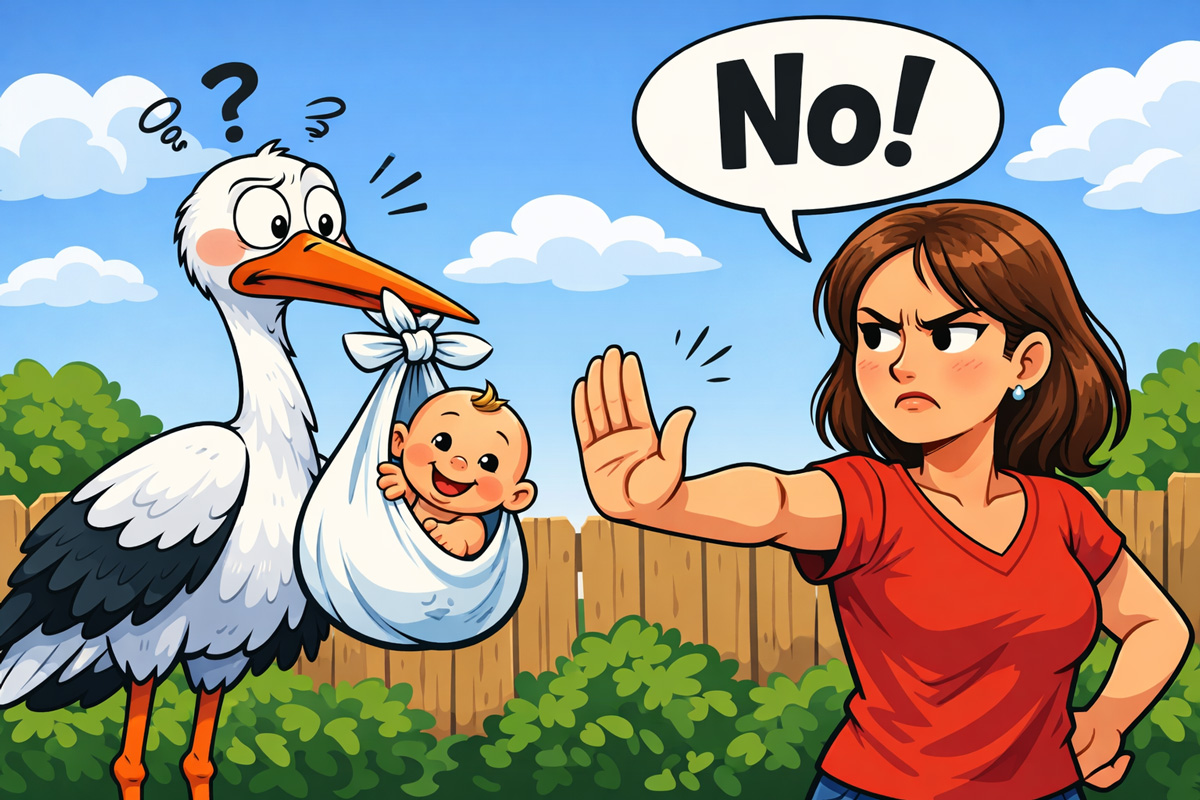
Different women have evolved in different ways. One obvious split in the evolution of women is the existence of these two groups:
The group of women that desire to have children.
The group of women that do not desire any children ever.
At first glance, the existence of these two groups is a mystery. Evolution normally favors reproduction (the largest number of surviving descendants). Therefore, it would make sense if all women evolved to desire to have children. How can we explain the existence of the percentage of women that truly do not want to have any children ever?
How did they evolve into existence? Why did their genes not become extinct if they want no children? Three reasons:
Rape (forced impregnation).
The absence of reliable contraceptive products in the past.
Masochism.
Those three reasons explain why a large group of women continued to exist despite not wanting to reproduce themselves. They were forced to reproduce. According to the ruthless and unethical principles of evolution, these women did not need to evolve the desire to reproduce, because they were forced to reproduce anyway, therefore their wishes were irrelevant.
Even when no rape occurred, they were still forced to have children, because consensual sex eventually caused pregnancy (throughout most of human history, prior to the invention of modern contraception).
The evolution of masochism in a substantial percentage of humans created an additional method of reproducing despite not wanting it. Masochistic women derive pleasure from their own suffering. They feel pleasure when they suffer unwanted pregnancies. They feel additional pleasure when they unwillingly care for their unwanted children and raise their children.
Many masochistic women secretly dislike children and/or the hard work of caring for children. This is not a well-kept secret, because you can detect it by observing how bad they are at parenting and the education of their children, because they do not really want to do it.
Some religious groups exhibit a significantly higher rate of masochistic personality disorders amongst their members. Within these religious groups, suffering is viewed as something admirable, sacred, and spiritual. Consequently, they have no sympathy for women that are forced to suffer the many difficulties of giving birth to babies and raising children.
Most people assume that only men support rape. However, a shockingly large number of women support rape (with the woman as the victim of rape), because they have a masochistic or sadomasochistic personality disorder.
For example, a study published in the Journal of Sex Research in 2009 (DOI: 10.1080/00224490802624406) examined the sexual fantasies of women. 14% of the women reported that they have either rape or ravishment fantasies at least once per week. It is important to distinguish between romanticized ravishment fantasies versus actual rape fantasies.
Shockingly, 55% of the fantasies contained aversive elements, meaning that they were actual rape fantasies containing genuine non-consent (not only token/fake resistance). 9% of the fantasies were completely aversive (full-on brutal violent rape).
In summary, it can be estimated that 8% of women fantasize about being raped at least once per week.
Violent sadomasochistic women have no sympathy for victims of rape and forced impregnation, because in their mind, brutal rape is something pleasurable to enjoy and fantasize about.